Creating an Online Course in South Africa: What You Need to Know
Online courses have become one of the most practical ways for South Africans to turn skills and experience into income. Whether you are a business owner, consultant, educator, or professional with specialised knowledge, digital learning allows you to teach once and earn repeatedly.
However, creating an online course in South Africa comes with realities that global advice often ignores. Data costs, load-shedding, local payment systems, VAT, and platform choices all affect whether a course succeeds or fails.
This guide explains what you need to know before you start, so you can avoid common mistakes and build a course that works in the South African market.
Why Online Courses Make Sense in South Africa
South Africa has a growing demand for practical, skills-based learning. Many people are looking for ways to upskill, start side businesses, or move away from unstable income sources.
Online courses work well in this environment because they:
- Allow flexible learning around work schedules and load-shedding
- Reduce costs compared to in-person training
- Can be accessed from anywhere with a smartphone
- Create scalable income opportunities for course creators
But success depends on designing courses that respect local constraints instead of copying overseas models.
Start With a Clear, Profitable Course Idea
One of the biggest mistakes new course creators make is starting with what they want to teach instead of what learners need to solve.
A strong course idea sits at the intersection of three things:
- A real problem people are already trying to solve
- Your practical experience or proven knowledge
- A clear outcome the learner can achieve
In South Africa, courses that focus on income generation, compliance, practical skills, or cost-saving methods tend to perform better than purely theoretical topics.
Before recording anything, validate your idea by checking search trends, social media discussions, and existing courses. Competition is not a problem — it is proof that buyers exist.
Design for Mobile-First and Low-Data Learners
Most South Africans will access your course on a mobile device. Many will rely on limited data bundles or inconsistent connectivity.
This means your course design must prioritise:
- Short video lessons (5–10 minutes)
- Clear audio and simple visuals
- Downloadable PDFs and worksheets
- Minimal file sizes and compressed video quality
Well-structured content is more valuable than long, unedited recordings. Learners want clarity, not volume.
You Do Not Need Expensive Equipment
Professional results do not require professional studios. Many successful South African course creators record with a smartphone, a basic microphone, and good lighting.
What matters more than equipment is:
- Clear explanations
- Logical lesson structure
- Relevant local examples
- Consistent presentation
Learners are paying for guidance and understanding, not cinematic production.
Choose Platforms and Payments That Work Locally
Your course platform and payment setup can either support or block sales.
South African buyers are more likely to complete a purchase when they can pay using familiar options such as instant EFT or local gateways.
When choosing where to host your course, consider:
- Whether pricing can be displayed in rand (ZAR)
- If PayFast, Yoco, Ozow, or PayPal are supported
- Your level of control over content and branding
- Long-term costs and platform fees
Many creators choose to host courses on their own websites using WooCommerce to retain ownership and flexibility.
Pricing, VAT, and Trust Matter
Pricing an online course is not just about affordability. It is also about trust and perceived value.
South African buyers generally prefer:
- Clear, upfront pricing
- VAT included in the displayed price
- No hidden subscription traps
- Transparent refund or access policies
Underpricing often signals low value, while fair pricing supported by clear outcomes builds confidence.
Marketing Is Part of the Product
Even the best course will not sell if people do not understand its value.
Effective course marketing in South Africa focuses on education first:
- Explaining the problem you solve
- Sharing practical insights publicly
- Using simple language instead of hype
- Showing real-world relevance
Blogs, short videos, email lists, and webinars are often more effective than aggressive advertising, especially for first-time course creators.
From Idea to Income Requires Structure
Creating an online course is not a single task. It is a structured process that includes planning, content design, production, hosting, pricing, and marketing.
Trying to figure everything out as you go leads to delays and wasted effort. A clear framework helps you move forward with confidence and avoid costly mistakes.
Explore the complete guide: [How to Create an Online Course in South Africa | SA Guide]
The Practical Next Step
If you want a step-by-step, South Africa–specific guide that takes you from planning to profit, How to Create an Online Course: From Planning to Profit (SA Guide) provides a clear roadmap.
The guide covers validation, course structure, recording on a budget, hosting options, local payment systems, VAT considerations, and sustainable marketing — all designed for real South African conditions.
If you are serious about turning your knowledge into a digital asset, this book helps you do it with clarity, structure, and confidence.
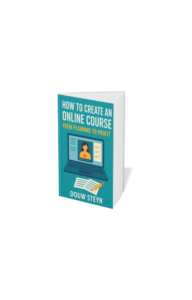
How to Create an Online Course: From Planning to Profit (SA Guide)
Turn your knowledge into income with this practical South African guide to creating, launching, and selling online courses. Learn how to plan, record, price, market, and scale your course using...