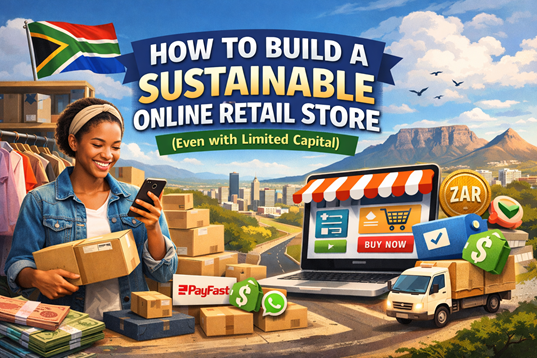
How to Build a Sustainable Online Retail Store in South Africa (Even with Limited Capital)
Starting an online retail store in South Africa doesn’t require millions of rands or advanced technical skills. What it does require is a clear plan, the right tools, and a focus on sustainability — not just environmental sustainability, but business sustainability too.
If you’ve been thinking about launching an online store but feel held back by budget or lack of experience, this guide will walk you through a practical, step-by-step approach to building a sustainable online retail store that can grow over time.
In this post, you’ll learn how to start small, minimise risk, and build a business that generates consistent income — even as a side hustle.
Why an Online Retail Store Works in South Africa
South Africa’s eCommerce market is growing rapidly, driven by mobile usage, digital payments, and changing consumer behaviour.
Here’s why this business model works:
- Low entry barrier: You can start with under R5,000
- Mobile-first market: Most South Africans shop via smartphones
- Growing trust in online shopping: Platforms like Takealot and Shopify stores are increasing consumer confidence
- Local niche opportunities: From township fashion to handmade goods
With load shedding and economic pressures, many South Africans are turning to side hustles — and online retail is one of the most accessible options.
Step-by-Step Guide to Building a Sustainable Online Retail Store
Step 1: Choose a Profitable Niche
Don’t try to sell everything. Focus on a specific niche.
Examples in South Africa:
- Affordable fashion for young professionals
- Natural skincare products
- Pet accessories
- Fitness gear for home workouts
Tip: Choose something with consistent demand, not just trends.
Step 2: Validate Your Idea (Before Spending Money)
Before building a website, test your idea:
- Post products on Facebook Marketplace
- Use WhatsApp groups
- Create a simple Instagram page
If people are willing to buy — you’re on the right track.
Step 3: Start Lean (Avoid Over-Investing)
Many beginners fail because they overspend early.
Start with:
- Small inventory
- Print-on-demand products
- Drop shipping (local suppliers)
The goal: Generate cash flow first, then expand.
Step 4: Set Up Your Online Store
You don’t need coding skills.
Use beginner-friendly platforms:
- Shopify
- WooCommerce (WordPress)
- Wix eCommerce
Focus on:
- Clean design
- Mobile optimisation
- Fast loading speed
Step 5: Add Secure Payment Options
South African customers prefer trusted payment methods:
- PayFast
- Yoco
- Ozow (EFT)
- Payflex (Buy Now, Pay Later)
Trust = conversions.
Step 6: Organise Delivery & Logistics
Delivery can make or break your business.
- Use Pargo for pickup points
- Courier Guy for door-to-door delivery
- Offer local delivery options
Pro tip: Be transparent with delivery times.
Step 7: Build a Simple Brand
You don’t need a big brand — just a consistent one.
- Choose 2–3 colours
- Create a simple logo (Canva)
- Use consistent messaging
Your brand = trust + recognition.
Startup Costs (South Africa Example)
| Item | Estimated Cost (ZAR) |
|---|---|
| Domain & Hosting | R300 – R1,000/year |
| Website Platform | R0 – R500/month |
| Initial Inventory | R1,000 – R5,000 |
| Marketing Budget | R500 – R2,000 |
| Packaging | R300 – R1,000 |
| Total Estimated Startup | R2,100 – R9,500 |
Tools You Need to Get Started
- Website: Shopify or WooCommerce
- Design: Canva
- Payments: PayFast or Yoco
- Delivery: Pargo / Courier Guy
- Marketing: Facebook, Instagram, TikTok
How to Get Customers (Practical Strategy)
Start where your audience already is:
- Post consistently on TikTok and Instagram
- Use WhatsApp status updates
- Run small Facebook ads (R50–R100/day)
- Offer limited-time deals
Content ideas:
- Product demos
- Customer testimonials
- Behind-the-scenes videos
Consistency beats perfection.
Pricing & Monetisation Tips
Your pricing must cover:
- Product cost
- Delivery
- Platform fees
- Profit margin
Simple formula:
Selling Price = Cost × 2 to 3
Test different pricing strategies and adjust based on demand.
Common Mistakes to Avoid
- Over-investing too early
- Choosing the wrong niche
- Ignoring customer service
- Not testing demand
- Giving up too quickly
Remember: Sustainability comes from consistency, not quick wins.
How to Scale Your Online Retail Store
Once you start making consistent sales:
- Expand your product range
- Invest in paid ads
- Automate processes
- Build an email list
- Create repeat customers
Scaling is about systems, not hustle.
Internal Resources to Help You Grow
• Building and Scaling a Profitable Drop Shipping Business in South Africa
• Digital Marketing for Beginners in South Africa
• Before You Launch an Online Store: The eCommerce Business Plan Most South Africans Skip
• From Counter to Chat: How AI Is Changing Retail in South Africa
Ready to Build Your Online Store?
If you want a step-by-step system, templates, and practical strategies tailored for South Africa, this guide will help you move faster and avoid costly mistakes.
Frequently Asked Questions
Can I start an online store with no money?
Yes, by using drop shipping or pre-orders, you can start with minimal upfront investment.
Do I need to register a business in South Africa?
Not immediately, but registering with CIPC is recommended once you start generating consistent income.
How long does it take to make money?
Some stores make sales within weeks, but building a sustainable income can take 3–6 months.
Conclusion: Start Small, Stay Consistent
Building a sustainable online retail store in South Africa is not about having everything perfect from day one.
It’s about starting small, learning fast, and improving consistently.
You don’t need advanced skills or a big budget — just a willingness to take action.
The opportunity is real. The tools are available. The market is growing.
Start today — even if it’s small.