How to Launch a Telehealth Service in South Africa (Without Costly Mistakes)
Telehealth is no longer a future concept in South Africa. It is already changing how patients access care and how healthcare professionals build sustainable practices. But while the opportunity is real, so are the risks.
Many practitioners and entrepreneurs rush into telehealth assuming it is simply “consulting online.” In reality, telehealth sits at the intersection of healthcare regulation, data protection law, technology systems, and patient trust. Getting any of these wrong can be expensive.
This guide explains what actually matters when launching a telehealth service in South Africa, and how to avoid the mistakes that quietly derail otherwise good ideas.
Why Telehealth Fails for So Many First-Time Providers
Most telehealth problems don’t show up on day one. They surface later, once patients are onboarded, payments are taken, or compliance is questioned.
Common failure points include:
- Using the wrong platforms for clinical consultations
- Ignoring HPCSA guidance until a complaint arises
- Handling patient data in ways that violate POPIA
- Offering services that don’t match a viable business model
- Building trust too late instead of from the start
These are not technical issues. They are structural decisions made early, often without enough local context.
Understanding Telehealth in the South African Context
Telehealth in South Africa is shaped by realities that don’t always apply elsewhere. Connectivity varies widely. Load shedding affects reliability. Patients may be mobile-only users. Regulations are strict, but often misunderstood.
A successful telehealth service accounts for:
- HPCSA expectations around professional accountability
- POPIA requirements for storing and transmitting health data
- Patients who value convenience but still expect professionalism
- Hybrid care models where online and in-person services overlap
Telehealth works best when it is designed intentionally, not improvised.
Choosing the Right Telehealth Business Model
One of the biggest mistakes new providers make is copying models that don’t fit their profession or market.
In South Africa, telehealth models that tend to work well include:
- Pay-per-session services for GPs and specialists
- Subscription-based care for chronic conditions and mental health
- Hybrid models that blend in-person assessments with online follow-ups
Your pricing, workflows, and technology should all support the same model. When they don’t, admin increases and patient experience suffers.
Technology Is Not the Strategy
Choosing software is important, but technology alone will not make a telehealth service successful.
What matters more is how systems work together:
- Secure consultation platforms
- Reliable scheduling and reminders
- Clear intake and consent processes
- Consistent documentation and follow-up
Patients don’t judge your service by the tools you use. They judge it by how easy, safe, and professional the experience feels.
Why Trust Is the Real Growth Lever
In telehealth, trust replaces the physical consulting room. Patients need confidence before they ever meet you on screen.
Trust is built through:
- Clear explanations of how online care works
- Visible compliance and professionalism
- Consistent communication and follow-up
- Predictable systems that reduce uncertainty
When trust is designed into your service, marketing becomes easier and patient retention improves naturally.
Where Most People Get Stuck
Many healthcare professionals understand their clinical role well but struggle with the business and operational side of telehealth.
Typical sticking points include:
- Unclear legal and ethical boundaries
- Overcomplicated workflows
- Inconsistent pricing and service scope
- Trying to scale before systems are stable
This is where having a structured, South Africa–specific roadmap makes a measurable difference.
Explore the complete guide: [How to Launch a Telehealth Service in South Africa | eBook]
Take the Next Practical Step
If you want a clear, structured guide that brings together compliance, technology, workflows, and business strategy, the eBook How to Launch a Telehealth Service: Guidelines for Online Success was written for exactly this purpose.
It goes beyond theory and provides a practical framework for building a professional, compliant, and scalable telehealth service in South Africa.
Format: Digital (PDF / EPUB)
Delivery: Instant download
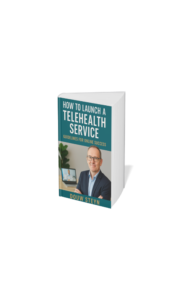
How to Launch a Telehealth Service: Guidelines for Online Success
A practical, South Africa–focused guide to launching, managing, and scaling a compliant telehealth service. Ideal for doctors, therapists, and health entrepreneurs entering digital healthcare. More to read: How to Launch...