
Turn a Few Good Meals into a Real Business
People are busy. Professionals need convenient weekday lunches. Families need help with dinner. Gym members want planned meals. People living alone want variety without cooking every night.
That creates an opportunity for entrepreneurs who can prepare good food reliably and turn it into a well-run business.
But being able to cook is only the beginning.
You also need to know what each meal really costs, what customers are prepared to pay, how much food to prepare, how to manage packaging and delivery, how to reduce waste, and how to get customers to order again.
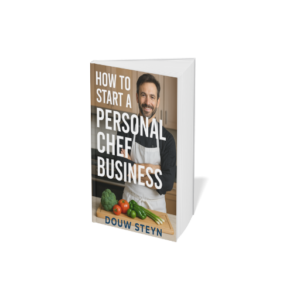
How to Start a Meal-Preparation Business in South Africa takes you through that process step by step.
The book deliberately encourages entrepreneurs to start with a manageable menu and a small group of paying customers instead of immediately investing in expensive equipment, premises or large quantities of stock.
What You Will Learn
- Choose Your Customer – Identify who you want to serve and the specific meal problem you can solve for them.
- Choose a Profitable Niche – Explore individual meals, weekly meal packs, family meals, fitness meals, frozen meals, office lunches and other practical models.
- Test Before You Invest – Use a small paid test to find out whether customers will actually buy before committing serious money.
- Understand Food-Business Requirements – Learn what to investigate regarding food premises, hygiene, municipal requirements and operating from home.
- Standardise Recipes and Portions – Build repeatable recipes and control serving sizes so margins do not disappear.
- Calculate the Real Cost – Include ingredients, packaging, labour, utilities, delivery, waste and other costs rather than looking only at food ingredients.
- Price for Profit – Understand pricing, margins, bundles, subscriptions and the effect of VAT where applicable.
- Build an Efficient Weekly System – Move from menu planning to pre-orders, purchasing, production, packaging and dispatch in a predictable cycle.
- Find Your First Customers – Use WhatsApp, local groups, offices, gyms, apartment complexes, social media, referrals and sampling.
- Build Repeat Revenue – Turn first-time customers into weekly buyers through meal packs, standing orders and subscriptions.
- Reduce Waste – Identify over-ordering, spoilage, poor portioning, weak menu items and unnecessary packaging losses.
- Scale Carefully – Know when to hire help, add equipment, move into larger premises or expand your delivery area.
The book’s approach is deliberately commercial: sell first, expand second. It recommends proving demand, measuring repeat orders and improving the model before adding complexity.
A Business You Can Start Small
You do not need to begin with hundreds of meals.
The book shows how a business can progress through manageable stages:
10 meals → 25 meals → 50 meals → 100 meals → repeat customers → predictable weekly revenue → expansion.
The first objective is much simpler than building a huge food company: can you make five or ten good meals, price them correctly, sell them to paying customers, deliver consistently and persuade those customers to buy again?
Built for South African Entrepreneurs
The examples are grounded in South African business conditions, including local customer types, delivery realities, ZAR pricing, food-business considerations and VAT references.
The book also stresses that municipal and regulatory requirements can vary and should be confirmed with the relevant authorities before important compliance decisions are made.
The Philosophy Behind the Book
Start small. Sell before you scale. Cost everything. Build repeat orders. Grow what works.
This is not a guide to building the biggest food business as quickly as possible.
It is a guide to building the smallest version that works, learning from real customers and growing only when the numbers support the next step.
Who This Book Is For
- Aspiring Food Entrepreneurs – Ideal for people considering their first small food business.
- Home Cooks – Useful for people already receiving compliments or informal orders and wondering whether they can turn cooking into income.
- Meal-Prep Entrepreneurs – Suitable for people wanting to sell individual meals, weekly packs or subscriptions.
- Home Food Businesses – Useful for existing home-based sellers wanting better costing, pricing and systems.
- Fitness Meal Businesses – Relevant to entrepreneurs considering high-protein or portion-controlled meal services.
- Family Meal Providers – Useful for businesses selling prepared family dinners or freezer meals.
- Side-Hustle Entrepreneurs – Suitable for people who want to test a food opportunity without immediately leaving employment or taking on large overheads.
Key Selling Points
Practical South African focus
26 action-oriented chapters plus conclusion and resources
Costing and pricing guidance
Home-kitchen and food-safety considerations
Weekly pre-order business model
Customer acquisition strategies
Repeat-order and subscription model
Production and delivery planning
Waste and profitability controls
Four-week startup action plan
The book culminates in a four-week process of choosing the customer and niche, costing properly, selling to real customers, and then improving from the evidence.


Reviews
There are no reviews yet.