Why Smart Entrepreneurs Lose Money When Emotions Run the Business
Many business owners assume that poor results come from weak strategy, bad timing, or lack of experience. In reality, a large percentage of financial losses come from something far less visible: emotional decision-making.
Even smart, capable entrepreneurs lose money when pressure, fear, frustration, or urgency start driving their choices instead of clear thinking.
Emotional Decisions Look Logical in the Moment
One of the most dangerous things about emotional decisions is that they often feel reasonable at the time.
Dropping prices to secure a sale. Taking on an unprofitable client to ease cash flow anxiety. Cancelling marketing after a slow month. Avoiding a difficult conversation because it feels uncomfortable.
Each of these decisions provides short-term emotional relief. The long-term cost, however, shows up later in reduced margins, exhaustion, damaged positioning, and stalled growth.
Where Emotions Quietly Drain Money
In South African businesses, emotional pressure tends to show up in a few predictable areas:
- Cash flow anxiety: Panic-driven decisions during slow months often destroy pricing discipline.
- Pricing discomfort: Fear of rejection leads to undercharging and long-term resentment.
- Sales rejection: One “no” feels personal and leads to overcorrection.
- Leadership conflict: Emotional reactions damage trust and productivity.
- Decision fatigue: Too many emotional decisions reduce judgment quality over time.
None of these issues come from a lack of intelligence. They come from unmanaged emotional pressure.
Why Intelligence Alone Is Not Enough
Entrepreneurship places people in constant uncertainty. Income fluctuates. Responsibility is personal. Decisions carry real consequences.
Under pressure, the nervous system prioritises emotional relief over long-term outcomes. This is why smart people still make poor business decisions when stressed.
Without emotional discipline, even the best strategies are applied inconsistently.
Emotional Discipline Is a Business Skill
Emotional control does not mean suppressing feelings or pretending pressure does not exist. It means recognising emotional triggers, slowing down reactions, and choosing responses deliberately.
Emotionally disciplined entrepreneurs:
- Pause before changing strategy
- Hold pricing despite discomfort
- Separate short-term emotion from long-term goals
- Recover faster from setbacks
This discipline compounds over time. Fewer reactive decisions mean fewer mistakes, clearer leadership, and more consistent financial performance.
The Hidden Cost of Burnout Disguised as Discipline
Many business owners believe pushing harder is discipline. In reality, constant emotional strain without regulation leads to burnout, not resilience.
Burnout reduces attention, judgment, and patience. The cost shows up in missed opportunities, poor decisions, and declining performance.
Emotional discipline protects energy so decisions remain sharp as the business grows.
Explore the complete guide: [Control Your Emotions, Control Your Business]
A Practical Next Step
If you recognise these patterns, the solution is not motivation or willpower. It is learning how to manage emotional pressure as deliberately as you manage finances or operations.
Control Your Emotions, Control Your Business is a practical guide written for entrepreneurs who want to make clearer decisions, lead more confidently, and stop losing money to emotional reactions.
The book focuses on real-world entrepreneurial pressure, including cash flow anxiety, pricing discomfort, sales rejection, leadership conflict, decision fatigue, and burnout disguised as discipline.
Ready to Build Emotional Discipline Into Your Business?
If you want more consistent decisions and sustainable growth, this guide will help you develop emotional control where it matters most.
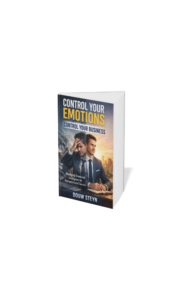
Control Your Emotions, Control Your Business
Entrepreneurship tests more than your strategy — it tests your emotional control. Control Your Emotions, Control Your Business is a practical guide for entrepreneurs who want to make clearer decisions,...